Treat the illuminated image as part of the interior
A framed digital image contributes light as well as color to a room. Before choosing the hardware, decide whether the display should sit quietly among other artworks, act as a feature at an entrance or change with a commercial presentation. Consider nearby materials, daylight and the distance from which people will first see it. An interior concept drawing is a useful starting point, but a sample under representative lighting is more informative.
Alihh's product material positions the wooden frame for galleries, museums and exhibition halls. The description supports a conversation about commercial presentation and customization; it does not establish that one screen treatment will suit every space. Share photographs or drawings of the proposed location. Ask the supplier to identify the available finish and display options for that location, then review the physical result with the person responsible for the interior design.
Specify anti-glare treatment explicitly
The product title emphasizes a matte, anti-glare frame, while the feature text presents anti-glare as an optional upgrade. To avoid treating different configurations as identical, include the requested anti-glare treatment in the written specification and ask the quotation to confirm it. Do not assume that every wooden frame in the range is supplied with the same front surface.
An anti-glare description is not a promise that reflections disappear from all angles or under every light source. Ask to see the proposed surface with the actual lighting arrangement and artwork. Examine bright areas, dark images, fine details and reflections from windows or luminaires. If a particular optical performance requirement matters to the project, request the relevant technical information rather than relying on a marketing adjective. The sample should resolve what the chosen treatment looks like in your room.
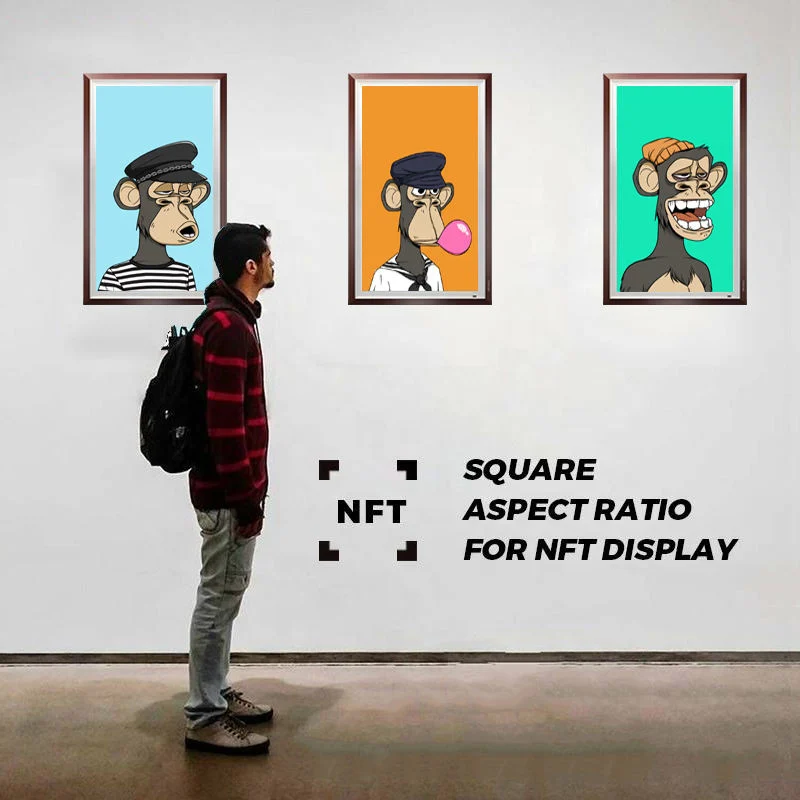
Approve the wood finish as a material sample
The source product text describes a wooden frame and a traditional visual character. For a commercial interior, request confirmation of the material, finish, color and profile supplied with the quoted configuration. A small online photograph may not reveal the texture, edge detail or variation that becomes obvious beside existing furniture. If matching other joinery is important, provide a reference and ask how closely it can be matched.
Natural material appearance should be discussed in practical terms. Decide which variations are acceptable and what would count as a mismatch in a grouped display. Ask whether the approved sample can be referenced in the order documentation. Do not assume that a descriptive wood name establishes a verified origin, environmental certification or emission rating. If your project requires documentation for those matters, identify the requirement and request evidence applicable to the proposed materials.
Resolve the frame dimensions before wall preparation
The public frame descriptions contain conflicting size ranges, so this page does not promise one fixed range or a maximum diagonal. Size and native resolution are quoted configuration details to confirm. Request the outside dimensions, active display dimensions, depth and weight for the actual frame. Those values serve different purposes: the installer needs the finished enclosure, while the content designer needs the display canvas.
For a group of frames, draw the complete arrangement with spacing and finished wall references. Check whether the visible image areas align when the outside frame profiles differ. Ask for mounting details and the cable exit location before conduits or wall panels are completed. If a recessed appearance is desired, have the installer review clearance and service access with the supplier. A flush-looking design should not prevent removal or place pressure on an enclosure that was not designed for that arrangement.
Review artwork fidelity with representative files
Bring your own images to the sample review. Choose a photograph with skin tones, a work with subtle gradients, a dark composition and an image with fine lines if those reflect the intended collection. Inspect them from the normal viewing distance and from closer positions that visitors may use. Record observations about detail, tonal appearance, visible cropping and the relationship between the image and the frame.
No calibrated color accuracy, color gamut or museum conservation standard is asserted on this page. If your project requires a measured color target or a particular calibration workflow, state it explicitly and ask what can be supplied. Higher native resolution is one configuration question, but it does not by itself settle image quality. Review the delivered panel, surface treatment, media processing and source files as a complete presentation rather than judging one headline specification.
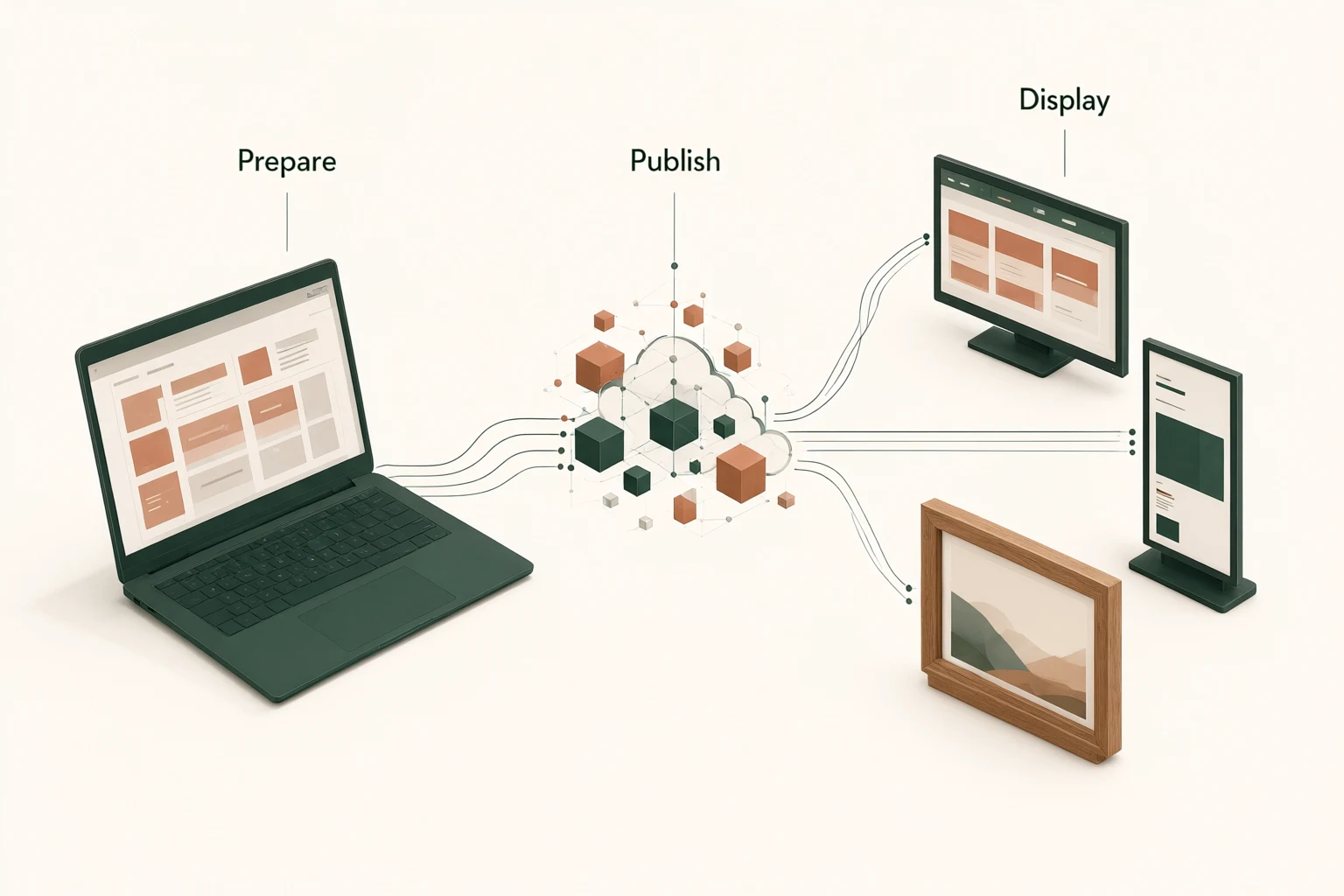
Design the composition for a framed display
A digital frame can show a single image, but the content still needs deliberate preparation. Confirm the native pixel dimensions and supported media formats for the selected unit. Ask how the player handles content that does not match the screen shape. Cropping, stretching and empty borders produce very different visual results, particularly when an artwork already has a strong compositional edge.
For exhibition labels or credits, decide whether text belongs on screen or on a separate physical label. Include the smallest required text in the sample. If the frame will show video, review transitions, looping and audio requirements with the content team and ask the supplier to confirm the supported behavior. Do not infer speakers, a particular codec or seamless looping from the phrase video frame. The aim is to approve the full presentation, including the moments between works.
Route power without compromising the finish
A clean interior installation needs an agreed cable path. Ask for the location and form of the power connection, the supplied power arrangement and any network connection needed by the chosen configuration. Coordinate these with the mounting hardware and the wall construction. Where a visible cable is unavoidable, decide how it will be dressed before the frame is installed rather than leaving the decision to the last person on site.
Service access deserves the same attention as the front view. Ask how the frame can be removed, whether connectors can be reached and what space is required around the unit. Have a qualified installer assess the wall and fixing method for the delivered weight. Environmental exposure, cleaning methods and operating hours should be reviewed with the supplier. This page does not imply outdoor use, moisture protection or unrestricted operation merely because the enclosure has a wooden decorative finish.
Choose a content workflow that the venue can manage
The digital frame range lists CMS-based remote updates through PC and app. Confirm the software arrangement for the proposed frame and decide whether it fits the venue's staffing. A small gallery may want a straightforward content change, while a larger organization may need central control and an approval process. Ask the provider to demonstrate your preferred workflow rather than assuming a particular scheduling or permission feature is included.
Clarify the service terms, any software costs and responsibility for account administration. If the venue has restricted internet access, involve its IT team early and request confirmation of network requirements. Ask what appears on screen during an interrupted update or connection loss. These are questions to resolve for the actual configuration. A display should remain manageable after installation, even when the person who selected the original artwork is no longer available.
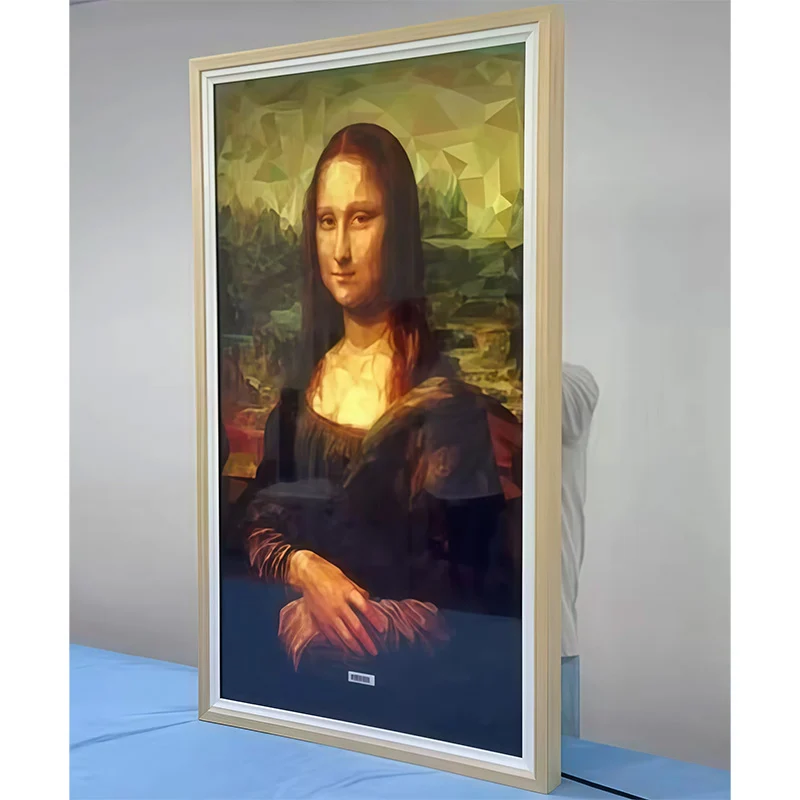
Use a room-based sample acceptance review
Set up the proposed frame in the real room where possible, or recreate its main lighting and viewing conditions. Review it with the interior designer, content owner and installer together. Each person will notice different issues: finish matching, image presentation or service clearance. Record the selected frame profile, surface treatment, panel configuration and software arrangement so the approval refers to a reproducible combination.
Include a content update and a safe restart in the review, alongside the visual assessment. Inspect the frame edges, cable exit and mounting result from the positions visitors will use. If several units will be displayed together, ask how visual consistency will be assessed for the order. These suggested checks are not a claim that Alihh follows a particular acceptance protocol. They give your team a practical record to use when approving the delivered configuration.
Build a quotation around the finished installation
Provide the intended room, quantity, desired dimensions, wall construction and sample artwork with your inquiry. Add finish references and explicitly request the anti-glare option you want reviewed. Identify whether the project needs still images, video, remote updates or a special content workflow. You can compare the wooden frame options while keeping these requirements consistent across the alternatives.
Ask the quotation to separate the frame, panel configuration, surface treatment, mounting accessories and software or service charges. Request sample arrangements, proposed timing and the applicable warranty and service terms for the order. The frame project inquiry page can carry the drawings and finish brief into that discussion. A successful purchase specification describes the object your installer will receive and the image your visitors should see, with unresolved choices clearly identified before approval.
Frequently asked questions
Is anti-glare standard on every wooden digital frame?
The published feature text presents anti-glare as an option. Request it explicitly and have the supplier confirm the treatment on the quoted configuration. Review a sample under your room's lighting before approving the surface for a commercial installation.
Which screen sizes and resolutions can I order?
Ask for a configuration-specific proposal. The public descriptions contain different size ranges and describe higher resolution as optional, so this page does not assign a universal size or fixed resolution. Confirm the native panel specification and finished frame dimensions together.
Can the frame match our interior wood finish?
OEM and ODM customization are listed, but the available finish and achievable match need discussion for your project. Provide a material reference and request a sample. Agree how the finish will be identified in the order and what variation is acceptable.
What should an architect include in the inquiry?
Include the wall elevation, preferred outside dimensions, mounting conditions, cable route, lighting information and finish reference. Add sample content and the intended updating workflow. Those details allow the frame, installation and software questions to be reviewed as one project.